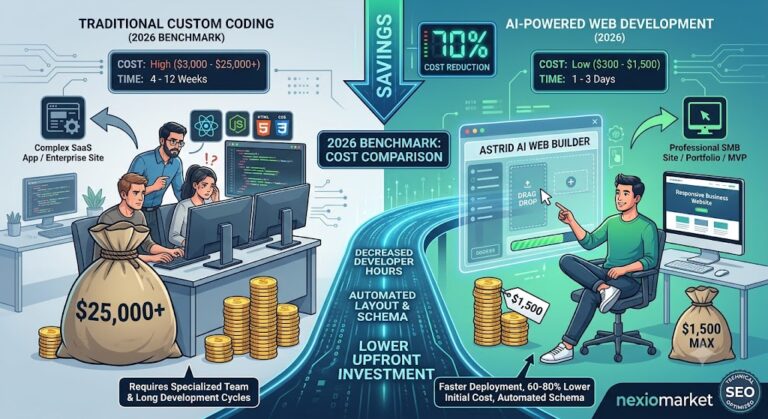
In 2026, implementing modern AI architecture in web development reduces total project costs by 60% to 70% by automating low-level coding tasks, streamlining UI/UX prototyping, and minimizing manual QA testing. By replacing repetitive developer workflows with automated AI modules, businesses achieve faster deployment cycles, lower billable engineering hours, and higher long-term return on investment (ROI).
Cost Comparison: Traditional Development vs AI-Driven Architecture
| Expense Category | Traditional Web Engineering | AI-Integrated Web Architecture | Savings Percentage |
| Frontend Layout & Prototyping | 40–60 Developer Hours | 2–5 Automated Hours | ~90% Reduction |
| Backend & API Glue Code | $2,500 – $8,000 | $500 – $1,500 | ~75% Savings |
| QA, Bug Testing & Debugging | 20–30 Manual Hours | Automated Continuous AI Audits | ~80% Reduction |
| SEO & Schema Generation | Manual Setup | Automated Contextual Schema | ~70% Faster |
| Total Average Initial Cost | $5,000 – $20,000+ | $1,500 – $5,000 | ~70% Total Savings |
1. Automated Code Generation and Reduced Labor Hours
The largest cost driver in traditional website creation is custom developer labor. Senior software engineers spend significant billable hours writing repetitive HTML, CSS, database queries, and boilerplate JavaScript.
Streamlined Workflows: Modern AI tools analyze design wireframes and immediately convert them into clean, responsive frontend code.
Focus on Complex Features: Instead of paying engineers to write basic layout structures, budgets are directed exclusively toward high-value business logic, custom security integrations, and core database management.
For a complete comparison between fully custom code and AI-built solutions, read our guide on AI Web Development vs Traditional Coding in 2026.
2. Rapid UI/UX Design and instant Prototyping
Designing a web interface used to require weeks of iterative user feedback, manual Figma mockups, and endless revision cycles.
Prompt-to-UI Acceleration: Designers now generate full-page layouts, color palettes, and component libraries within minutes using AI-driven prototyping tools.
Instant User Experience Testing: AI models predict user interaction patterns and heatmaps before launching, avoiding costly redesigns after deployment.
3. Automated QA Testing, Security Audits, and Technical SEO
Fixing bugs and site errors after launch is exponentially more expensive than catching them during development. AI architecture integrates continuous quality assurance directly into the build pipeline.
Automated Bug Detection: AI scripts identify broken links, security vulnerabilities, and code bloat before pages go live.
On-Page Technical SEO: Modern AI systems automatically format heading structures (H1–H3), optimize image alt tags, generate JSON-LD Schema markup, and maintain fast load times for Google’s Core Web Vitals.
4. Scalable Maintenance and Lower Long-Term Retainers
A common hidden cost of owning a website is monthly technical upkeep and feature updates.
Lower Developer Retainers: Because AI agents can assist with regular CMS updates, content additions, and routine database optimizations, ongoing monthly retainers drop significantly.
Future-Proof Infrastructure: As web technology evolves, AI framework components can be refactored automatically without rebuilding the entire website from scratch.
Frequently Asked Questions (FAQ)
Does lower cost mean lower website quality?
No. AI handles repetitive foundational tasks, while human experts focus on strategic design, security, and specialized branding—resulting in high-end websites built in half the time.
How much can a startup save by using AI web development in 2026?
Startups typically save between $3,000 and $15,000 on initial development, allowing them to allocate more capital toward user acquisition, marketing, and sales strategies.
Can AI-architected websites scale for high enterprise traffic?
Yes. AI development tools build upon enterprise-grade frameworks (like Next.js, React, or modern headless CMS architecture) that scale seamlessly as web traffic increases.