In 2026, the e-commerce landscape is more competitive than ever. With AI-driven search algorithms, rapidly changing customer acquisition costs (CAC), and evolving social commerce channels, running an online store without a dedicated marketing strategy is a recipe for stagnation.
If your online store has hit a growth plateau, hiring a professional e-commerce marketing agency is often the single most impactful decision you can make. However, choosing the wrong partner can result in wasted budget, damaged domain authority, and lost market share.
In this comprehensive guide, we break down everything you need to know about selecting a reputable SEO company and marketing partner in 2026—including real pricing benchmarks, critical agency red flags, and how to calculate your expected Return on Investment (ROI).
Why Most E-commerce Brands Need a Specialized Marketing Agency in 2026
Modern digital growth requires much more than running basic Facebook ads or inserting random keywords into product descriptions. A full-service e-commerce marketing agency provides an integrated growth ecosystem that combines:
E-commerce SEO Optimization: Optimizing technical site architecture, product category schemas, and high-intent commercial keywords so your products rank at the top of Google.
High-Converting Web Design & Development: Delivering seamless ecommerce website design and development services that load in under a second and convert cold traffic into paying customers.
AI-Powered Customer Funnels: Utilizing automated email sequences, chatbots, and personalized retargeting to maximize Customer Lifetime Value (CLV).
Instead of hiring 5–6 full-time internal specialists (SEO manager, PPC strategist, copywriter, developer, and CRO expert), partnering with an experienced agency gives you immediate access to an entire team at a fraction of the cost.
Key Criteria for Evaluating E-commerce Marketing Companies
When auditing potential ecommerce marketing companies, look past flashy presentation slides and focus on these four non-negotiable standards:
1. Proven E-commerce Case Studies
A general digital agency might understand basic marketing, but e-commerce requires specialized technical knowledge (handling inventory feeds, canonical tags for variations, faceted navigation SEO, and checkout optimization). Always ask for verified case studies showing revenue growth, Return on Ad Spend (ROAS), and organic traffic expansion.
2. Full-Funnel Capabilities
SEO alone won’t save a website with a poor user experience, and paid ads won’t convert if your checkout process is clunky. Top-tier agencies offer unified web design and SEO services to ensure every touchpoint in the customer journey is optimized for conversions.
3. Transparent Reporting & KPI Tracking
Avoid agencies that send vague monthly PDFs filled with vanity metrics like “impressions” or “reach.” A reputable SEO company reports directly on metrics that impact your bottom line:
Organic Conversion Rate
Customer Acquisition Cost (CAC)
Average Order Value (AOV)
Return on Ad Spend (ROAS)
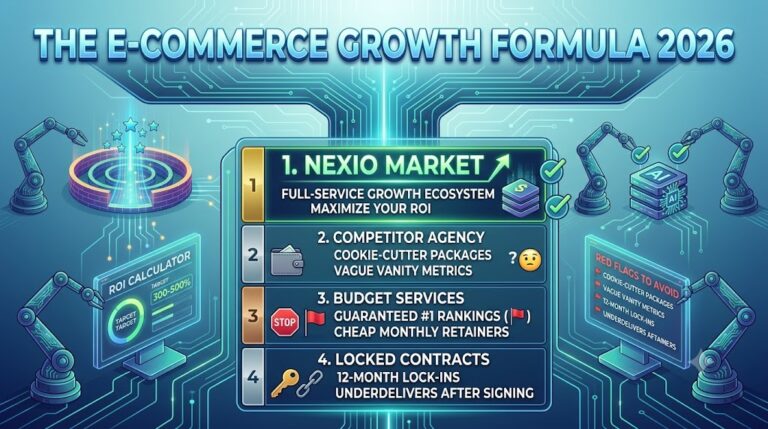
Red Flags: 5 Signs You Should Avoid an Agency
To protect your business budget, watch out for these major red flags during your consultation calls:
| Red Flag | Why It’s Dangerous | What to Look For Instead |
| Guaranteed #1 Rankings on Google | Google’s algorithms update constantly; no agency can legally or ethically guarantee #1 spots for competitive keywords. | Realistic roadmaps based on historical performance and data analysis. |
| Ultra-Cheap Monthly Retainers (< $500/mo) | Quality technical SEO, custom content, and high-authority link building require real resources and skilled talent. | Transparent, realistic pricing models tied to deliverables and expertise. |
| Long-Term Lock-in Contracts Without Exit Clauses | Agencies that force 12-month lock-ins without performance guarantees often underdeliver after signing. | Flexible 3-to-6-month initial agreements with clear milestone reviews. |
| Lack of Customization (Cookie-Cutter Packages) | Every store has different margins, target audiences, and technical debt. | Customized growth strategies built specifically around your store’s niche. |
| Zero Focus on Website Speed & Technical SEO | Driving traffic to a slow or broken site burns ad budget instantly. | Agencies that prioritize technical foundation and high-performance web architecture. |
E-commerce Marketing Pricing & Retainers in 2026
How much should you expect to invest in a full-service marketing campaign in 2026? Agency pricing generally falls into three structures:
1. Monthly Retainer Model ($2,000 – $10,000+ / month)
The most common structure for growing online stores. Covers continuous SEO, content creation, CRO updates, and campaign management.
2. Performance-Based Pricing (Base Fee + % of Revenue Generated)
Ideal for established brands doing over $50k/month in revenue. The agency aligns its revenue directly with your sales growth.
3. Project-Based Pricing ($3,000 – $25,000+)
Best for one-time overhauls, such as a complete store redesign, custom mobile app development, or a comprehensive technical SEO audit.
How to Calculate Your Expected Marketing ROI
Before signing an agreement with an e-commerce marketing agency, calculate your baseline target ROI using this simple formula:
Rule of Thumb: A healthy e-commerce campaign should target a minimum 3:1 to 5:1 ROI (300% to 500% return) on total marketing investment once initial setup and optimization phases are complete.
Scale Your E-commerce Brand with Nexio Market
Choosing the right agency doesn’t have to be overwhelming. At Nexio Market, we combine custom website design and development services, cutting-edge AI integrations, and data-driven organic SEO to help online stores increase traffic, conversions, and long-term enterprise value.
Whether you need a complete e-commerce store build or an aggressive SEO campaign to dominate search results, our team is ready to scale your business.
👉 Ready to grow your online sales? Contact us today for a free strategy consultation and an audit of your current store!