Selecting a technology partner in 2026 is no longer just about hiring a team to write code. With the rapid integration of artificial intelligence, automated workflows, and generative search engines, enterprise decision-makers must evaluate agencies based on long-term scalability and business efficiency. This guide outlines 7 technical criteria every business should evaluate when choosing an AI and web engineering partner in 2026.
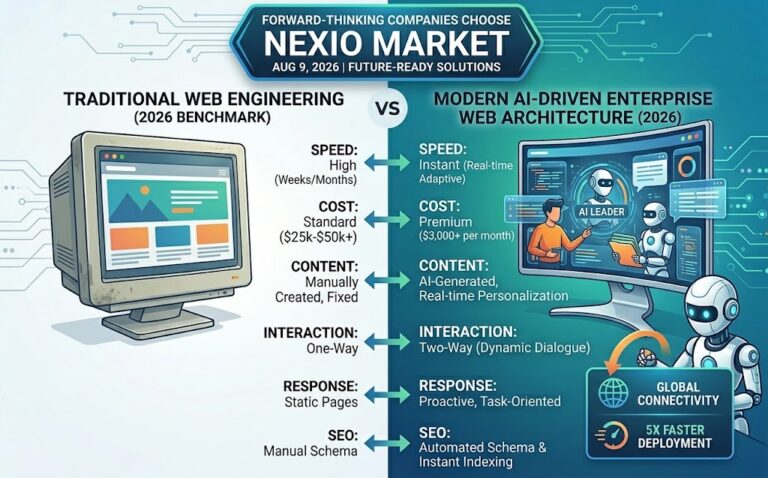
The 2026 Shift: Traditional Agencies vs. AI-First Engineering Partners
| Evaluation Area | Traditional Web Development Agencies | Modern AI & Web Engineering Partners |
| Primary Architecture | Monolithic code bases or template builders | Modular, API-first architecture selected according to project scale |
| Search Engine Strategy | Conventional SEO focused mainly on search-engine visibility | Traditional SEO + Generative Engine Optimization (GEO) |
| System Automation | Third-party plugins and manual entry | Custom AI agents integrated with business workflows |
| Source Code Ownership | Locked ecosystems or high technical debt | Clean codebases with full client IP ownership |
| Deployment Speed | Months-long waterfall project cycles | Iterative development with rapid deployment cycles |
7 Core Criteria for Evaluating Your Technology Partner
1. Custom AI Integration & Workflow Automation
Most traditional web firms simply embed basic third-party chat widgets that rely on static scripts. A true AI engineering partner grounds AI systems on your approved business data and knowledge sources, connecting them securely to your CRM, databases, and operational workflows.
Evaluate whether the agency can build systems that securely query internal knowledge bases (e.g., via RAG or structured APIs).
Ensure the solution supports multi-language intake and automated lead qualification.
2. High-Speed Architecture & Core Web Vitals Performance
Page speed directly impacts conversions and search visibility. Rather than accepting heavy, plugin-laden templates, evaluate whether the partner builds on modern, clean frameworks engineered for fast loading and strong Core Web Vitals performance.
3. Generative Engine Optimization (GEO) Readiness
In 2026, ranking on traditional search engines is only half the battle. Your digital platform must be structured for generative AI platforms like ChatGPT, Perplexity, and Google Gemini.
A qualified partner focuses on structured data (JSON-LD), semantic search readiness, and brand entity authority—improving the likelihood that your brand can be discovered, understood, and cited across generative search experiences.
4. Cross-Platform Mobile & Web Continuity
Businesses need unified digital ecosystems. Ensure your technical partner can build cross-platform mobile applications (iOS and Android) that share business logic and database endpoints seamlessly with your core web platform.
5. Code Ownership & Technical Debt Minimization
Proprietary platform lock-ins and undocumented code bases drastically increase long-term maintenance costs. Always verify that:
You retain full Intellectual Property (IP) and source code ownership.
The system is documented, modular, and designed for straightforward scaling by internal or external teams.
6. Security, Compliance, and Data Governance
Integrating AI into enterprise workflows requires strict data handling. Ensure the development partner builds architecture configured to support applicable requirements such as GDPR and CCPA, while enforcing secure encryption across all API interactions.
7. Transparent Deployment & Post-Launch Support
A reliable technical partner provides clear project roadmaps, rigorous QA testing, and ongoing performance optimization rather than abandoning the project after deployment.
💡 Questions to Ask Before Signing a Development Contract
Before committing to a technology partner, ask these 5 essential pre-contract questions:
IP Ownership: Who owns the final source code and custom AI workflow configurations upon payment?
Data Governance: How is proprietary company and customer data handled when connecting to AI models?
Integrations & Docs: How are API connections and backend architectures documented for future developers?
Performance Benchmarks: How will site speed, accessibility, and Core Web Vitals performance be measured and validated?
Post-Launch Support: What dedicated technical support and system maintenance are provided after project deployment?
How Nexio Market Applies This Evaluation Framework
At Nexio Market, we operate as a global AI and web engineering partner designed to meet these exact 2026 technical standards. We engineer custom web platforms, cross-platform mobile apps, automated AI workflows, and GEO-aligned digital assets built for enterprise growth.
High-Speed Engineering: We construct clean, modular software architectures focused on performance, security, and long-term maintainability.
Custom AI Integration: We design tailored AI agents that automate customer intake and internal workflows directly within your web or mobile applications.
End-to-End Client Ownership: Clients retain full ownership of their software source code and IP, ensuring zero vendor lock-in.
Build Your 2026 Digital Strategy
Whether you are launching a new enterprise platform, modernizing legacy web architecture, or deploying custom AI agents, choosing the right technical partner determines your growth trajectory.
Explore Capabilities: Review our engineering services on the Nexio Market Services page.
Inspect Our Work: View our active software projects on the Nexio Market Portfolio page.
Read Our Story: Learn more about our technical mission on our About Us page.
Consult Our Engineers: Submit your project scope through the Nexio Market Order Page or connect directly via our Contact Us page.
Connect on LinkedIn: Follow our official updates on the Nexio Market LinkedIn page.
Frequently Asked Questions (FAQ)
What is the difference between traditional SEO and GEO in 2026?
Conventional SEO focuses on optimizing site architecture and content visibility for search engines like Google. Generative Engine Optimization (GEO) focuses on structured data, technical entity schema, and semantic context so generative AI search tools (like ChatGPT and Perplexity) can parse, comprehend, and cite your business accurately.
Why is full source code ownership critical when hiring an engineering agency?
Full code ownership ensures your business is not tied to proprietary agency platforms or recurring licensing lock-ins. You retain total control over your intellectual property, security compliance, and future software expansions.